Scope and bid review
We clarify scope, compare bids line by line, surface exclusions, and help you select the right team—not simply the lowest number.
Owner's Representation
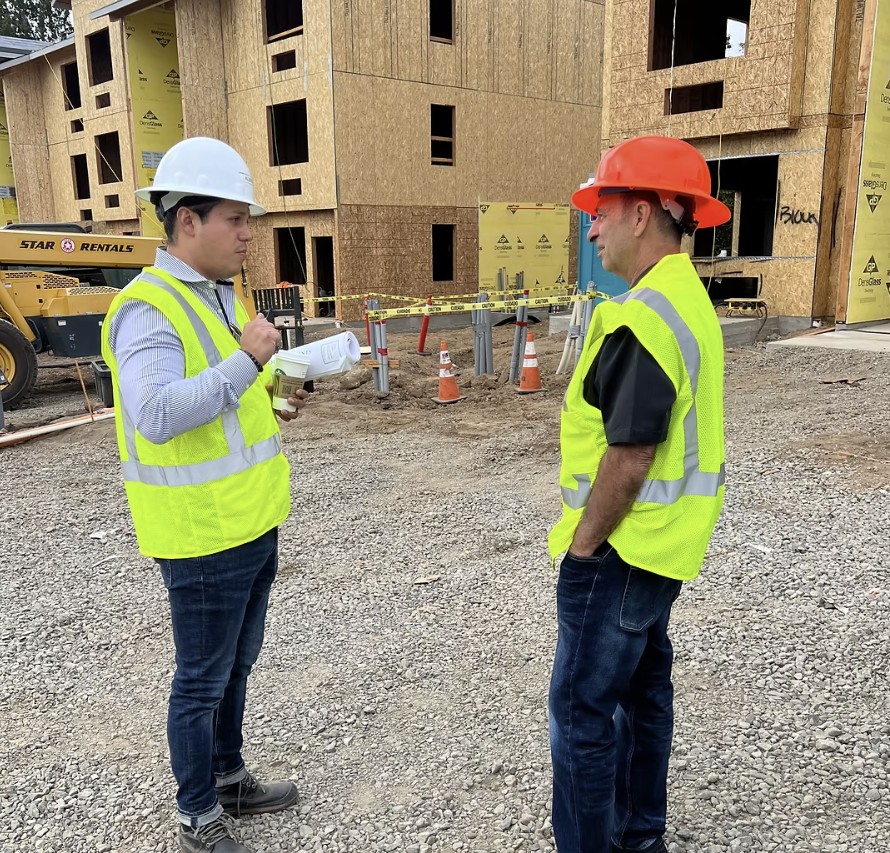
Leeway is a construction and maintenance company first. For multifamily capital projects, we also bring owner-side support to scope, bids, schedule, cost, quality, and communication—without separating the decisions from the work on site.
We work on the owner's side of the table. That means challenging unclear scope, catching gaps before award, documenting decisions, and keeping the project aligned with the asset plan—not adding work because it benefits a contractor.
Use Leeway when your team needs experienced field oversight without adding permanent construction staff, or when a renovation, exterior program, repositioning, or major repair needs closer control.

Understand the role
An owner’s representative helps ownership evaluate and coordinate a construction project: clarify the scope, compare proposals, track cost and schedule, review changes, and document progress through closeout. The role connects the owner’s priorities with decisions in the field. Its authority and deliverables depend on the project agreement.
For a multifamily capital project, that means more than tracking a construction date. A roofing program affects access and resident communication. A unit renovation affects vacancy and leasing. An exterior repair affects the building’s long-term condition. The point is to keep those consequences visible while the work gets done.
These are different responsibilities, not automatically competing choices. A general contractor delivers the contracted construction. An owner’s representative supports ownership’s decisions and oversight. A project may need one, both, or an owner’s internal team performing the oversight role.
An owner’s representative does not automatically replace the contractor, architect, engineer, or required inspections. It does not automatically eliminate contractor markup or guarantee savings. Legal, design, engineering, and compliance questions belong with the appropriate qualified professionals; Leeway helps coordinate that work, not provide legal advice.
Look at the decisions your team has to manage, not just the project total. Multiple properties, occupied-building work, inconsistent bids, interdependent trades, or repeated scope changes can justify owner-side support. A clear, contained scope with an available owner team may not need a separate representative.
Bring that support into the conversation while the scope and bids are still being shaped. It is harder to resolve unclear exclusions after award or missing materials after mobilization. If the work is already underway, start with the existing agreement, current budget, open decisions, and documented site conditions.
Leeway can perform construction and maintenance and provide owner-minded coordination. Define which role we hold on your project, who contracts with each trade, who approves costs, and how any work performed by Leeway is reviewed. Do not assume a company performing work is also an independent reviewer of its own pricing.
In the Cavanaugh Investments engagement, the supplied case study covers more than $303,000 in completed renovation and asset-preservation work across multifamily properties in Oregon and Southwest Washington. It shows planning and coordination tied to actual unit renovations and exterior work—not oversight detached from execution.
Read the Cavanaugh Investments case study Explore our capital improvement workWhat ownership gets
We clarify scope, compare bids line by line, surface exclusions, and help you select the right team—not simply the lowest number.
We track milestones, long-lead items, decisions, and field progress so delays are visible early enough to act on them.
Every change is reviewed against the original scope, field conditions, cost, and schedule before it reaches ownership.
Your asset team receives practical updates, photo documentation, budget status, open decisions, and next steps.
We coordinate with property management, leasing, residents, designers, engineers, contractors, and ownership. Plans account for occupancy, access, safety, noise, leasing targets, and the operating realities of the property.
Questions owners ask
Our perspective comes from the owner and developer side of real estate. These are the questions we hear most when capital projects start to get complicated.
When a capital project is bigger, riskier, or more coordinated than your team has time to manage. Common triggers are multi-building exterior programs, phased renovations at occupied properties, projects with several contractors and consultants, and work where a bad scope decision would be expensive.
If your property manager is already the de facto construction manager, that is usually the signal.
Mostly by catching problems before they are priced in. That means challenging the scope, leveling bids so they compare the same work, questioning materials and approach, and reviewing pay applications against completed work.
The goal is not the cheapest number. It is spending the money on the right work, in the right order.
Every change gets a reason, a price, and a schedule impact before ownership approves it. We check whether the work was already in the original scope, whether the pricing is reasonable, and whether there is another way to solve the problem.
Approved changes are logged so ownership can see the running cost picture, not just individual line items.
On an owner's rep engagement, we keep those parties moving in the same direction on ownership's behalf: tracking open questions, decisions, submittals, inspections, and the schedule. Design and engineering decisions stay with licensed professionals.
Legal and compliance questions go to the appropriate qualified professionals — we help coordinate with them, not replace them.
Someone who knows construction walks the work, compares it to the scope, and reports back to ownership in writing. Progress, quality concerns, schedule risk, and pending decisions are surfaced early instead of discovered at closeout.
Because Leeway also performs construction and maintenance work, our oversight comes from people who know what the field actually looks like.
Tell us about the asset and the scope. We'll walk the site, define the work, and come back with a budget you can underwrite.