
Property management companies
You are judged on turn time and unit quality. We give you a crew that hits dates and leaves units your leasing team is happy to show.
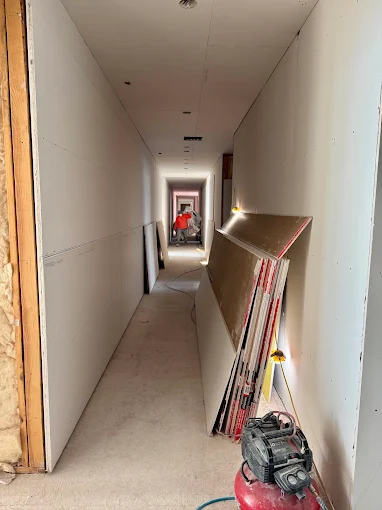
Unit Turns & Make-Ready
Leeway runs apartment unit turns as a repeatable production process — standardized scopes, sequenced trades, and a quality check before the keys go back to your leasing team.
A unit turn is not a small remodel. It is a deadline with a rent number attached. The work has to be predictable, the finish has to match the rest of the property, and the unit has to be genuinely ready — not ready except for three punch items nobody mentioned.
We build turns around the rent-ready date. Scope is confirmed up front, materials are staged before the crew arrives, and trades are sequenced so paint is not waiting on flooring and flooring is not waiting on a plumber who never got called.
That structure is what lets us handle rolling turns across a portfolio without the quality drifting from one unit to the next. It also means your on-site team stops acting as a general contractor between move-out and move-in.
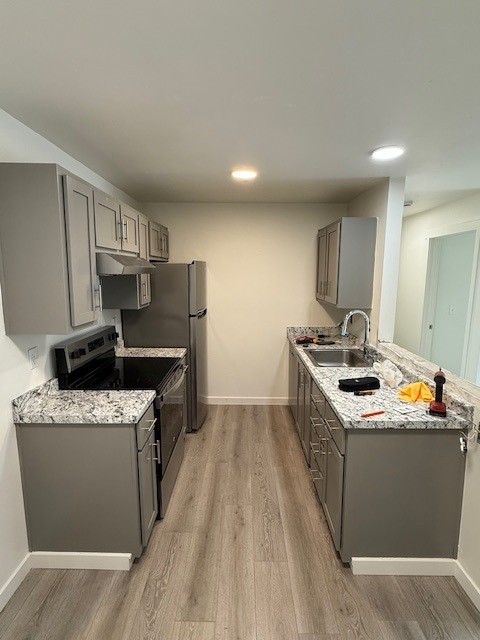
Who this is for
You are judged on turn time and unit quality. We give you a crew that hits dates and leaves units your leasing team is happy to show.
You want vacancy loss controlled and a consistent product across the community, not a different finish level depending on who was available that week.
You need turn costs and turn times that are comparable property to property so you can actually manage the portfolio.
When turns are part of a rent-growth plan, the finish package and the schedule both matter. We build the scope around the target rent.
Scope of work
Why owners choose Leeway
Schedules are built backward from your rent-ready date, with materials staged in advance so the crew is never waiting on a delivery.
Same scope, same finishes, same quality check across every unit and every property in the portfolio.
We walk the unit before handoff and fix punch items ourselves. Your team should not be the one finding them.
If a turn uncovers a bigger problem — subfloor, plumbing, envelope — you get photos and a recommendation instead of a covered-up surprise.
How it works
We walk the unit, document conditions, and confirm the scope against your make-ready standard and target rent.
Materials are ordered and staged, trades are sequenced, and a rent-ready date is confirmed with your leasing team.
Crews work the unit in order, with daily cleanup and coordination around residents in the rest of the building.
We walk the finished unit, close out punch items, and hand it back documented and ready to show.
Turn workflow
Vacancy time grows in the gaps between trades: waiting on an inspection, a scope decision, a material delivery, or the next crew. A unit turn run as one coordinated workflow closes those gaps, so the unit moves from move-out to rent ready without sitting idle.
The work between residents
An apartment make-ready is the inspection, repair, finish work, cleaning, and final check needed to prepare a vacant unit for the next resident. A unit turn is the broader move-out-to-handoff process. Teams often use the terms interchangeably; what matters is agreeing on what “ready” means.
A standard turn restores the property’s existing finish standard. A value-add renovation changes that standard—new cabinets, flooring, fixtures, or a different layout. Keep those decisions separate so a routine vacancy does not quietly become an unapproved renovation.
Start with these checks, then adapt them to the unit, your property standard, and the agreed scope. They are not a substitute for required inspections or specialist assessments.
Resolve demolition, concealed damage, and rough repairs before finish work. Coordinate wall preparation, paint, flooring, cabinets, and fixtures around the actual materials and installation requirements—not a fixed order that ignores the unit. Plan curing time, inspections, and deliveries before setting the handoff date.
A light cosmetic turn and a unit with subfloor damage will not share a reliable deadline or price. Track what is blocking each unit, who owns the next step, and when management needs to make a decision. A completed trade is not the same as a completed unit.
Construction support for property managersFAQ
An apartment make-ready is the inspection, repairs, finish work, cleaning, and final check that prepare a vacant unit for the next resident. A unit turn is the broader move-out-to-handoff process; the agreed scope defines what rent-ready means at your property.
Typical unit turns are completed in 7–9 days, depending on the scope of work and condition of the unit. Material availability, trade coordination, and required inspections also affect the schedule, so confirm the work after the move-out walk before setting a rent-ready date.
We scale crews to the schedule. Single vacancies, rolling weekly turns, and multi-unit blocks after a large move-out season are all normal work for us. We confirm capacity before committing to a date.
Yes. If you already have a make-ready standard — paint colors, flooring spec, fixture package — we work to it. If you do not, we can help you build one so every unit comes back the same way.
Yes. Cabinet replacement, full flooring, bath and kitchen upgrades, drywall repair, plumbing fixtures, doors, and trim are all in scope, along with the light cosmetic turns.
By sequencing trades rather than stacking them. The schedule is built backward from the target rent-ready date, materials are staged ahead, and quality checks happen before turnover, not after a resident complains.
We do a walk before handoff and document it. If something is not right, it gets corrected before your team markets the unit.
Constantly. Hallways, elevators, and parking are shared with residents, so access, noise windows, dust control, and daily cleanup are planned into the schedule.
Depending on condition, a turn can involve general repairs, drywall, paint, flooring, carpentry, cabinets and countertops, plumbing and electrical fixture work, and cleaning. The scope set at inspection decides which trades are needed.
One schedule per unit, with the order of trades set by what each one needs finished before it starts. We track what is blocking each unit and who owns the next step, so management gets one point of contact instead of several.
Tell us about the asset and the scope. We'll walk the site, define the work, and come back with a budget you can underwrite.